In the year of Christ 1571, at the age of thirty-eight, on the last day of February, anniversary of his birth, Michel de Montaigne, long weary of the servitude of the court and of public employments, while still entire, retired to the bosom of the learned Virgins [the Muses], where in calm and freedom from all cares he will spend what little remains of his life now more than half run out. If the fates permit, he will complete this abode, this sweet ancestral retreat; and he has consecrated it to his freedom, tranquility, leisure.
This was the Latin inscription on the wall of a side-chamber of Montaigne’s library where he dedicates his rest of the life reading, writing and eventually becoming the reluctant Mayor of the city of Bordeaux.
The works Montaigne produced made the philosopher Maurice Merleau-Ponty call him a writer who put “consciousness astonished at itself at the core of human existence.”
For us 21st century readers, Montaigne is widely credited for popularising ‘essays’ as a literary genre so his retreat into the bosom of the learned Virgins turned out to be quite useful spilling over to the later centuries.
Fun fact: His birthdate served as the basis for establishing February 28th as the National Essay Day in United States
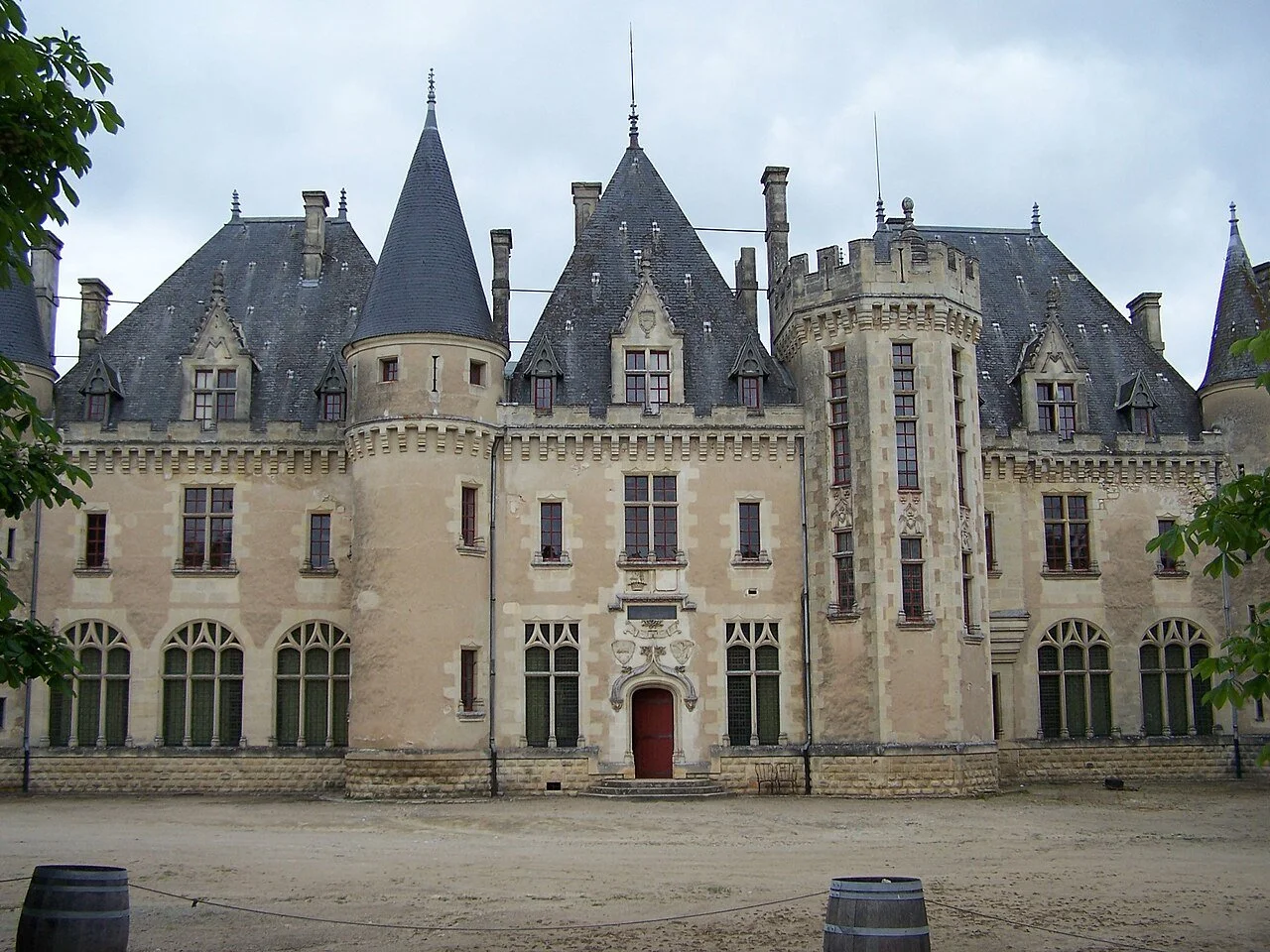
Château de Montaigne, a house built on the land once owned by Montaigne's family. His original family home no longer exists, although the tower in which he wrote still stands.
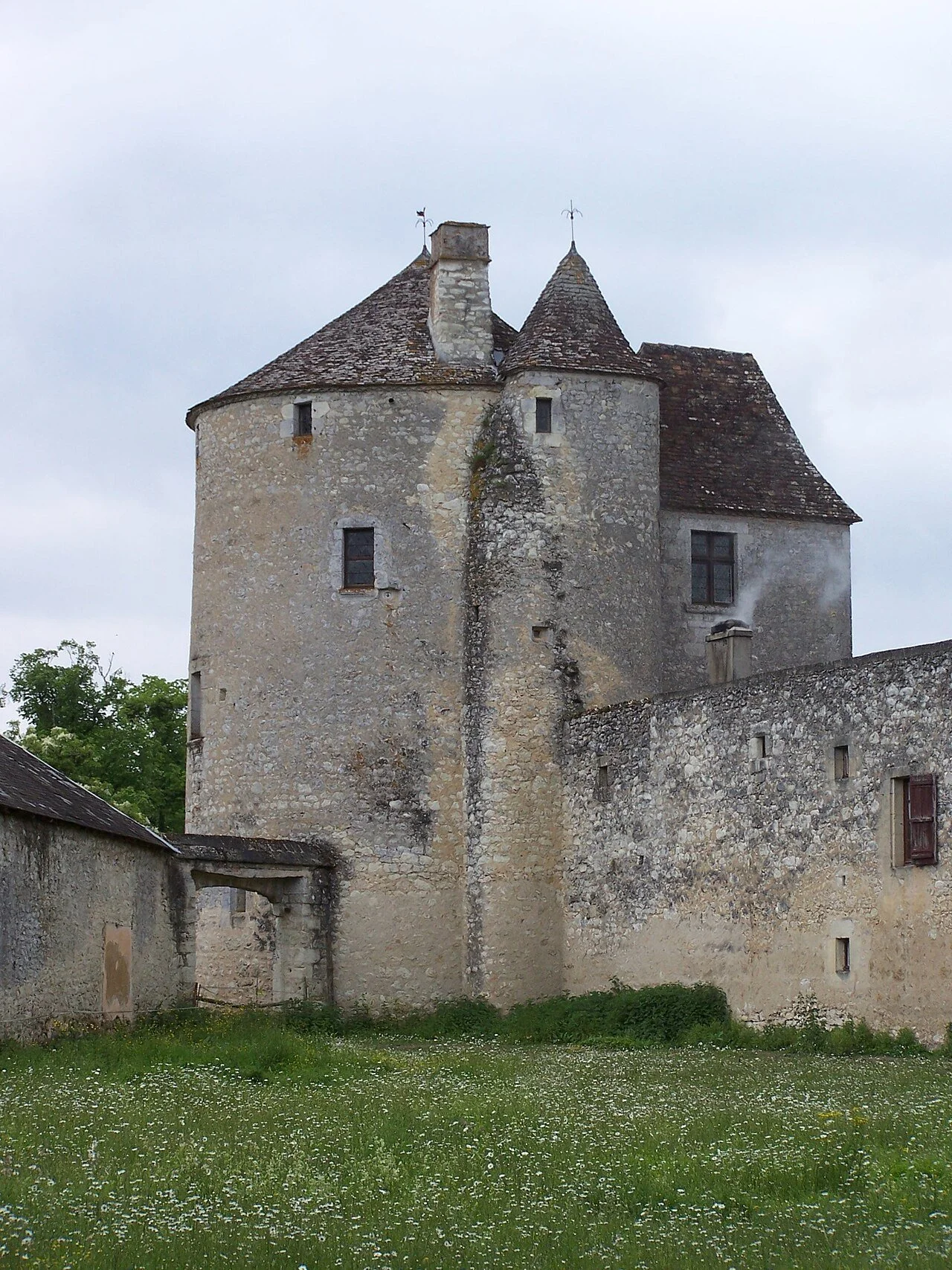
The Tour de Montaigne (Montaigne's tower), where Montaigne's library was located, remains mostly unchanged since the sixteenth century.
Having committed himself to a life of reading and contemplation, Montaigne picked a perfect corner of his estate to be his library. He chose one of the two towers at the corner to be his all-purpose retreat while the other was reserved for his wife.
From the deeply and lovingly researched book by Sarah Bakewell
One can climb the steps today as a tourist and step into the same room that Montaigne would have spent days and nights in. One might not find the murals on the walls or any underfoot covering but that wasn’t the most splendid part of the room anyway.
The most striking feature of the main library room, when Montaigne occupied it, was the fine collection of books, housed in five rows on a beautiful curving set of shelves. The curve was necessary to fit the round tower, and must have been quite a carpentry challenge. The shelves presented all Montaigne’s books to his view at a single glance: a satisfying sweep. He owned around a thousand volumes by the time he moved into the library..
Also around the room were Montaigne’s other collections: historical memorabilia, family heirlooms, artifacts from South America. Of his ancestors, he wrote, “I keep their handwriting, their seal, the breviary, and a particular sword that they used, and I have not banished from my study some long sticks that my father ordinarily carried in his hand.”
Decorated in the ornamented style typical of French Mannerism style, the paintings and elaborate borders filled "every inch" of the available surface, including "ceiling beams, and ceiling." One of the central theme of the paintings gathered in the space seems to have been nudity, a question metaphorically at the heart of the writing project of the Essays.
Going further than the murals, he had the roof beams painted with quotations, mostly classical. As a daily reminder of his commitment to literature perhaps or perhaps because it was the interior design fashion that time.
“Solum certum nihil esse certi
Et homine nihil miserius aut superbius
Only one thing is certain: that nothing is certain
And nothing is more wretched or arrogant than man”
How can you think yourself a great man, when the first accident that comes along can wipe you out completely? (Euripides)
〰️
There is nothing more beautiful life than that of a carefree man; Lack of care is a truly painless evil (Sophocles)
How can you think yourself a great man, when the first accident that comes along can wipe you out completely? (Euripides) 〰️ There is nothing more beautiful life than that of a carefree man; Lack of care is a truly painless evil (Sophocles)
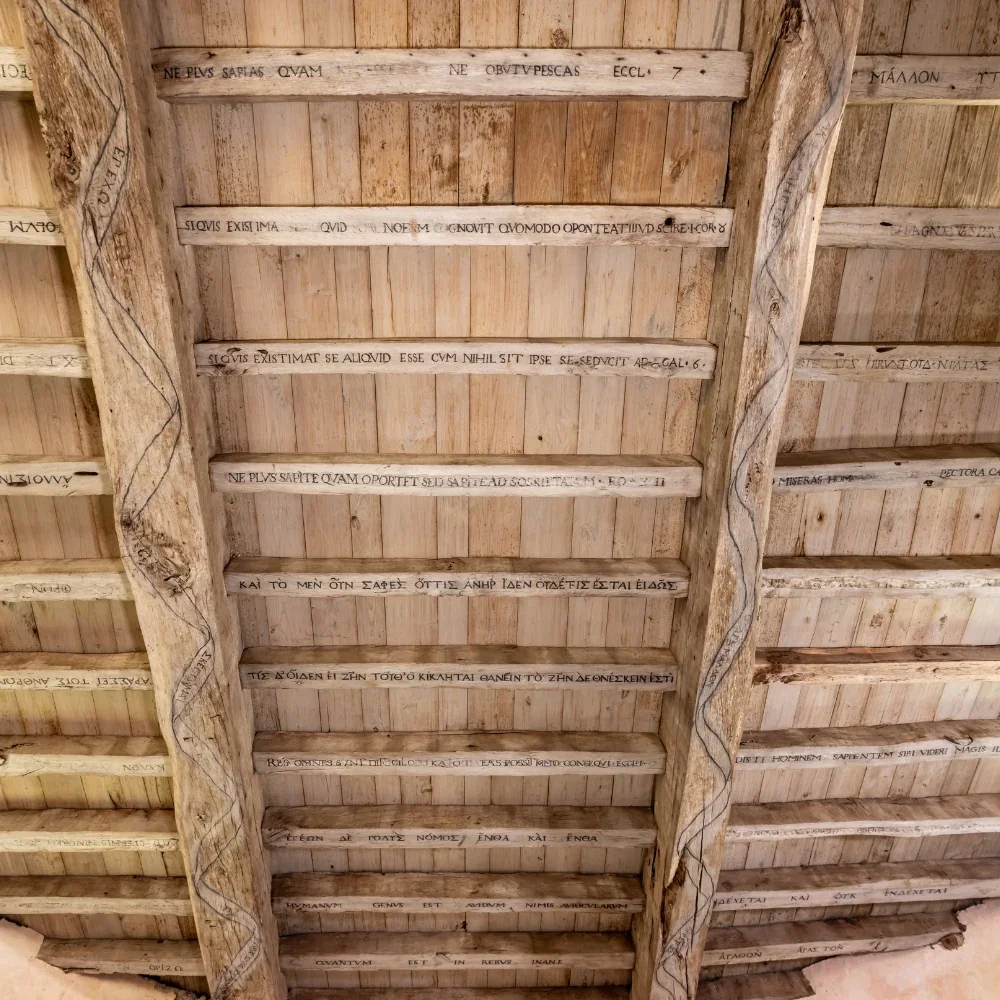
From the Montaigne estate website.
The beams would have served Montaigne as a daily reminder to follow the footsteps of Seneca who urged his fellow Romans to retire in order to “find themselves”.