Recently, I was on a long 9-hour flight twice. On one leg, I slept through entirely but on the same flight back home, it was daytime and I didn’t want to spoil my sleep cycle, so I gobbled up three movies back to back. They were all so great that I wanted to catalogue them here.

Chopin, Chopin is a biopic on the life of the composer, Frédéric Chopin. Having absolutely zero training in classical music both Indian and Western, I only had a recollection of the name from my Classical Playlist on Apple Music. It was wonderous to follow along in his journey as he rises to stardom in the 1830s Paris. The part that I didn’t know was he had tuberculosis not considered a transmittable disease at the time. His diagnosis was quite clear by the doctors and he knew he was going to die from the illness (eventually passing away at the age of 39). This death sentence led him to produce some of the most exceptional music not understood in his time but made him a classic for us. His affairs, the Paris salons of the time and the scenes showcasing the flu were quite intriguing in the movie.
Here, I found a painting depicting Chopin on his deathbed. The colours and the sombre mood with him in all white and the rest of his attendants in all brown and black make for an arresting art piece.
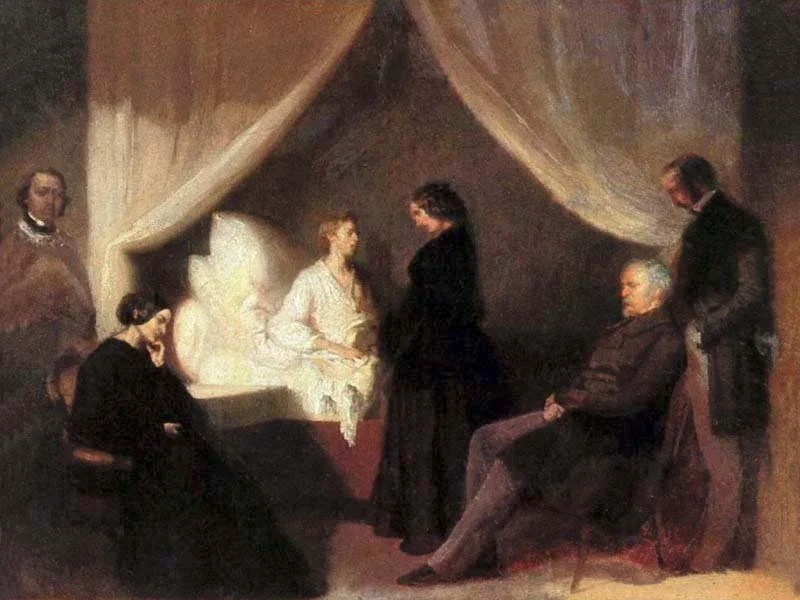
Chopin on His Deathbed, by Kwiatkowski, 1849, commissioned by Jane Stirling. Chopin sits in bed, in the presence of (from left) Aleksander Jełowicki, Chopin's sister Ludwika, Marcelina Czartoryska, Wojciech Grzymała, Kwiatkowski.
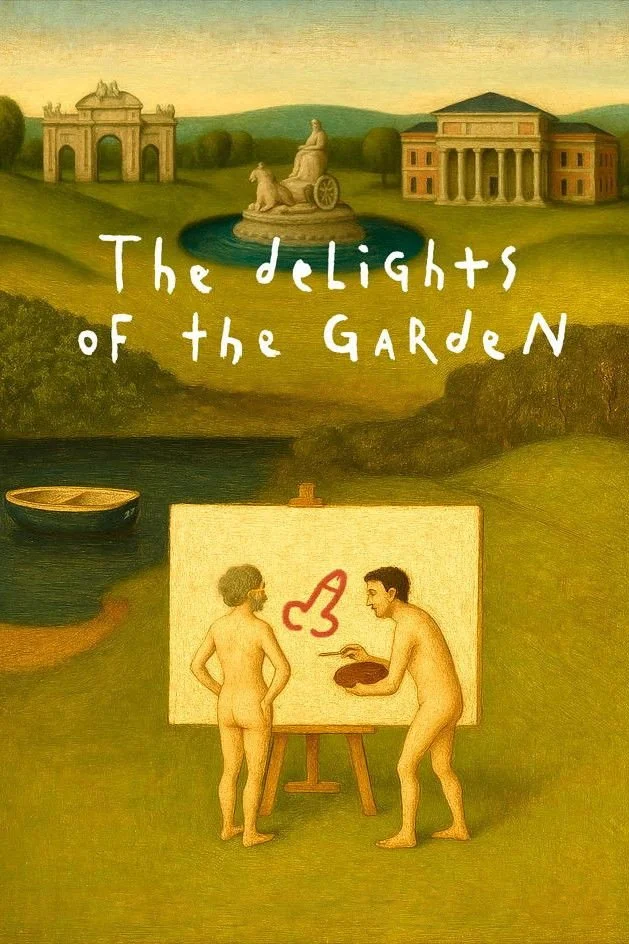
The Delights of The Garden is a Spanish comedy movie that revolves around a painter who is now past his prime and has started working on a new Pollock-style painting because of his shaky hands. His ex-wife is his gallerist and his son has now moved from a trip back from India to live with him in his studio (that he is already sharing with another painter).
This was the first time I watched a movie that’s based on a painter and is ticklish funny. I am now thinking about my fellow passengers who would be hearing slight chuckles every now and then emanating from where my seat was.
PS: There are gorgeous paintings revealed in the last few scenes of the movie and I am still trying to find the artist behind them.

Los Domingos or Sundays (in Spanish) is a coming-of-age movie of a 17-year old who attends a catholic school. She is enchanted by the life of the nuns and begins to form a deeply religious fervor that culminates in her desire to join the cloistered convent instead of preparing for university.
I’ve been a product of a catholic school and the allure of the hymns, the fellowship of the choir (incidentally the protagonist is also part of a choir) and the quiet retreat from a very chaotic world was being felt under the skin by me. In my teenage years, I also loved to sing carols and hymns when I was by myself and conceptually nuns were quite cool in my head (they still are). It was interesting because in the last city, a shopkeeper told me the story of Mother Teresa and how she is a celebrated saint in Albania, his home country.
Hence, all my neurons fired up on reading the synopsis of the movie. I really loved watching it. The movie is made quite tenderly and the fierce resolve of Ainara comes through easily.